


If you are serious about landscape photography, architecture, or creating cinematic video frames, you know full well...

Search
Say something...
Nothing found. Please repeat.
Unsupported browser. Sorry...
Search
Say something...
Nothing found. Please repeat.
Unsupported browser. Sorry...
-
-
Photo lenses
-
-
11mm
 15mm
 21mm
 30mm
 45mm
 150mm
 Kits

-
- Macro
- Video lenses
- Filters
-
-
Screw-in filters
 Irix System
 Magnetic MMS
 Magnetic MMS Drop-In
 Other filters
 Language selectorSettingSearch
Say something...
Nothing found. Please repeat.
Unsupported browser. Sorry...
CartThere are no more items in your cart0Blog
Stay updated with the Irix blog
-
 Perfection in every frame. A guide to the Irix Edge 100 mm square filter systemRead more...
-
 Why Irix Revo? Filters built for tough conditions09/15/2026Read more...
A good photographic filter should do its job while staying out of the way of the lens behind it as much as possible....
-
 Affordable Hollywood Within Reach08/26/2026Read more...
Modern video production has long moved beyond the boundaries of big-budget film studios, giving independent...
Blog categories
Search in blog

Firefly vs Blackstone Series Comparison – Which Irix Lens to Choose?
Posted on: 10/14/2025By Marcin FWhen buying a new lens, many photographers face a choice between two Irix series: Firefly and Blackstone. At first glance, the differences may seem small, since both variants offer the same optics and specifications. However, the housing design, field usability, and small ergonomic details can greatly affect the comfort of using the lens. It’s worth understanding what truly distinguishes the Firefly and Blackstone series to choose the version best suited to your needs.
Construction – lightness vs durability
The most noticeable difference between Firefly and Blackstone is the body material. The Firefly series was created with mobility in mind, so its housing is made of high-quality plastic, making the lens significantly lighter. This is a huge advantage when taking your gear hiking, on long treks, or during travel, where every gram in your backpack matters. The Irix Firefly lens is also slightly cheaper, making it an attractive choice for those just starting their photography journey.
Blackstone, on the other hand, takes a completely different approach. Its aluminum–magnesium alloy housing gives it a premium feel. The lens is more solid, better balanced, and more resistant to mechanical damage. For many users, aesthetics also play a role: engraved markings and refined details make the Blackstone look more professional. The downside, of course, is its heavier weight, but in return, you get a construction that can withstand tougher conditions.
It’s worth noting that despite being lighter and made of plastic, the Firefly does not fall short of the Blackstone in terms of optical quality. The glass elements, Neutrino coatings, and optical design are identical in both series, so photos taken with the Firefly retain the same sharpness, contrast, and lack of distortion. The difference in body material mainly affects weight and durability, not image quality.
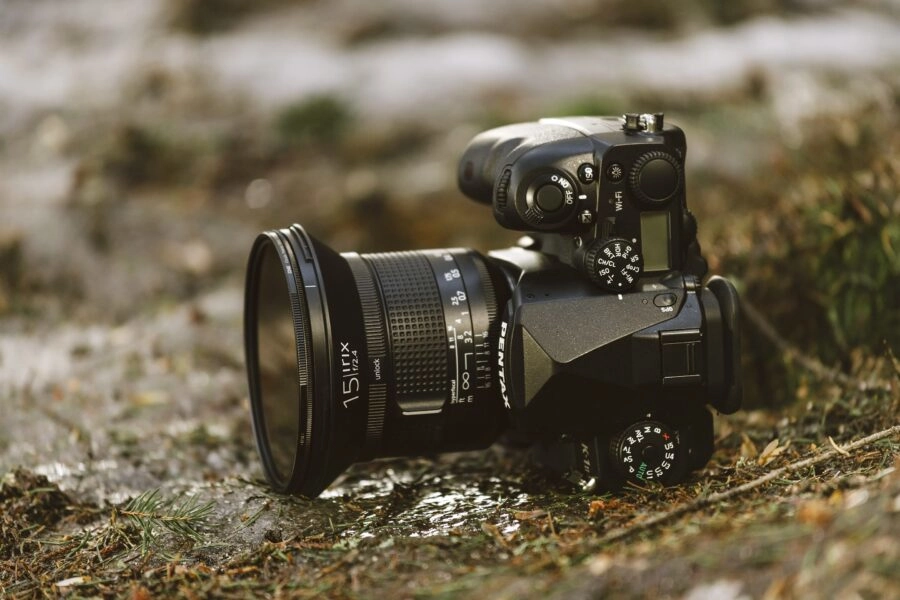
Practical differences between Irix Firefly and Blackstone
In terms of portability, Firefly clearly wins over Blackstone thanks to its lighter weight. However, there are other advantages to its reduced mass — not only the comfort of carrying a lighter backpack but also greater convenience when shooting handheld, with stabilizers, or even when using drones, which are becoming increasingly popular.
Blackstone, as mentioned before, excels in durability. It is more resistant to impact and demanding environments, offering the necessary sense of security when working in tough conditions, including rain, fog, or snow. It’s a solution made for photographers who aren’t afraid to work in challenging weather, as Blackstone lenses are fully sealed and made from stronger materials.
In practice, both series serve similar purposes — they are ideal for landscape, architecture, interior, and astrophotography. Firefly performs perfectly during travel and long expeditions, while Blackstone is made for extreme conditions and reliability. Firefly is a great choice for beginners and those who value mobility, while Blackstone is intended for professionals and enthusiasts who demand uncompromising build quality.
Functionality and design details
In terms of functionality, both series offer the same features: Focus Lock, a click at infinity, compatibility with gel filters, and a focus calibration window. The differences lie in the details:
- Firefly – The housing is made of durable composite material. The Firefly version has three rubber seals protecting the mount and mechanism against moisture and dust. The focus ring is rubber-coated, improving grip and comfort in outdoor conditions. Although the body is made of plastic, the optics remain identical to the Blackstone — offering the same high image quality.
- Blackstone – Lenses in this series are built from aluminum and magnesium alloy, giving the housing exceptional rigidity. Blackstone lenses have four sealing rings (one more than Firefly), increasing resistance to dust, water, and extreme weather. In addition, engraved markings glow under UV light, making it easier to operate in the dark. Blackstone lenses are heavier — the 15 mm model weighs 51 g more than the Firefly, and the 11 mm about 30 g more.
Which lens best suits your photography style?
In summary, both variants offer the same excellent optical quality and functionality but differ in construction philosophy. The image quality remains identical — the choice comes down to your working style and the conditions in which you most often shoot. If mobility, lightness, and lower price are key — choose Firefly. If you prioritize reliability, durability, and premium build — go with Blackstone. In both cases, you get what Irix is best known for: outstanding optics, a wide field of view, and photographer-oriented design.
 Posted in: Irixlens Blog
Related posts
-
 Happy Easter
Posted in: Irixlens Blog04/06/2023Easter is just around the corner and you know what that means - it's time for our egg-cellent sale!Read more...
-
 Start may with Irix
Posted in: Irixlens Blog04/27/2023The weather is getting better, nature is blooming, so it's the perfect time for nature photos. Our lenses will help...Read more...
-
 SUMMER DEAL – ALL FILTERS ARE 25% OFF!
Posted in: Irixlens Blog06/15/2023Unleash the beauty of your travel photography with Irix – enjoy 25% OFF all filters up until July 15th!Read more...
-
 FATHER’S DAY 2023 – 25% OFF SELECTED LENSES!
Posted in: Irixlens Blog06/18/2023Make this year's Father's Day truly special and give your dad a one-of-a-kind gift - Irix Dragonfly 30 mm and 45 mm...Read more...
-
 Q MEDIA uzyskało dotację z Unii Europejskiej na realizację projektu
Posted in: Irixlens Blog02/05/2025Q MEDIA uzyskało dotację z Unii Europejskiej na realizację projektu pn. „Promocja produktów marki IRIX na rynkach...Read more...
Call Our Store
Boxed:
Sticky Header:
Sticky Add To Cart
Font:

Header 1

Header 2

Header 3

Header 4

Cookie information
This website site uses cookies to provide you with the highest quality experience. We also use third-party cookies to improve our services, analyze and then display ads related to your preferences based on your browsing behavior analysis. Our Cookie & Privacy Policy.
Cookie management
Cookies necessary to ensure proper service and operation of our online store. They allow us to remember user settings, such as language, currency, shopping cart contents, page layout, etc. Functional cookies do not collect any personal data or send any information to external parties.
Cookies Provider Purpose Validity term PHPSESSID IRIX Store The PHPSESSID is a cookie that is used to identify a user's session on a website. A session is a mechanism for preserving state and user information between individual requests during a single connection session. The PHPSESSID cake stores a unique session ID that is required to process requests and responses between the browser and the server. These cookies only last until you close your browser.
Session PrestaShop-# IRIX Store The PrestaShop cookie stores data to keep the user's session open, including currency, language, customer ID, and other necessary information for the shop's proper operation.
480 hours _x13eucookie IRIX Store Remembers cookie preferences.
365 days _x13eucookie_consent_hash IRIX Store Remembers cookie preferences and latest consent date.
1 year _ga_* Google Used by Google Analytics to collect data on how many times a user has visited the site, as well as dates of the first and last visit.
1 year test_cookie Google Used to check if the user's browser supports cookies.
1 day Statistics cookies collect anonymous information about users, such as the number of visitors, link sources, etc. These files help us understand how visitors use our website.
Cookies Provider Purpose Validity term _gid Google Registers a unique identifier that is used to generate statistical data about how a visitor uses the site.
1 day _gat Google Used by Google Analytics to throttle request rate
1 minute _ga Google Registers a unique identifier that is used to generate statistical data about how a visitor uses the site.
2 years Marketing cookies are used to track users through different websites. Their purpose is to show more tailored advertising content.
Cookies Provider Purpose Validity term _gcl_au Google Used by Google AdSense to test ad effectiveness on the websites that use their services.
permanent _fbp Facebook This is a cookie set by Facebook and is used to deliver a series of advertisement products such as real time bidding from third party advertisers.
3 months These cookies are fine-tuning our website to your preferences. For example, they are used to display a selection of products recommended for you.
Cookies Provider Purpose Validity term cp-popup-last-displayed Irix This Cookie keeps a record of when the last time a pop-up banner was displayed on a page.
3 days cp-popup-4 Irix This cookie brings up the pop-up window.
permanent Other cookies that are not uniquely classified.
Security cookies provide security authentication, fraud prevention measures and other user protection services.
Cookies Provider Purpose Validity term __stripe_mid Stripe Set for fraud prevention purposes and helps us assess the risk associated with an attempted transaction
1 year __stripe_sid Stripe Set for fraud prevention purposes and helps us assess the risk associated with an attempted transaction
30 minutes About Cookies
Cookies are small text files that are stored on your computer or mobile device by the websites you visit. They are used for various purposes, such as remembering user login information, tracking user behavior for advertising purposes and personalizing the user's browsing experience. There are two types of cookies: session cookies and persistent cookies. The former are deleted when your browser session ends, while the latter remain on your device for a specified period of time or until you manually delete them.
-
Leave a comment